By Dr Tan Chyn Hong, Orthopaedic Surgeon · Asian Healthcare Specialists
What young athletes players need to know about shoulder and knee pain — and when to take it seriously.
It starts as a dull ache after training. Then it’s there during games. Then it doesn’t go away at all.
Shoulder and knee pain are two of the most common complaints we see in young athletes — and two of the most commonly ignored. Athletes push through. Parents assume it’s growing pains. Coaches call it muscle soreness. Sometimes they’re right. But sometimes they’re not, and that distinction matters enormously for a young athlete’s long-term health.
The Shoulder: What’s Actually Happening
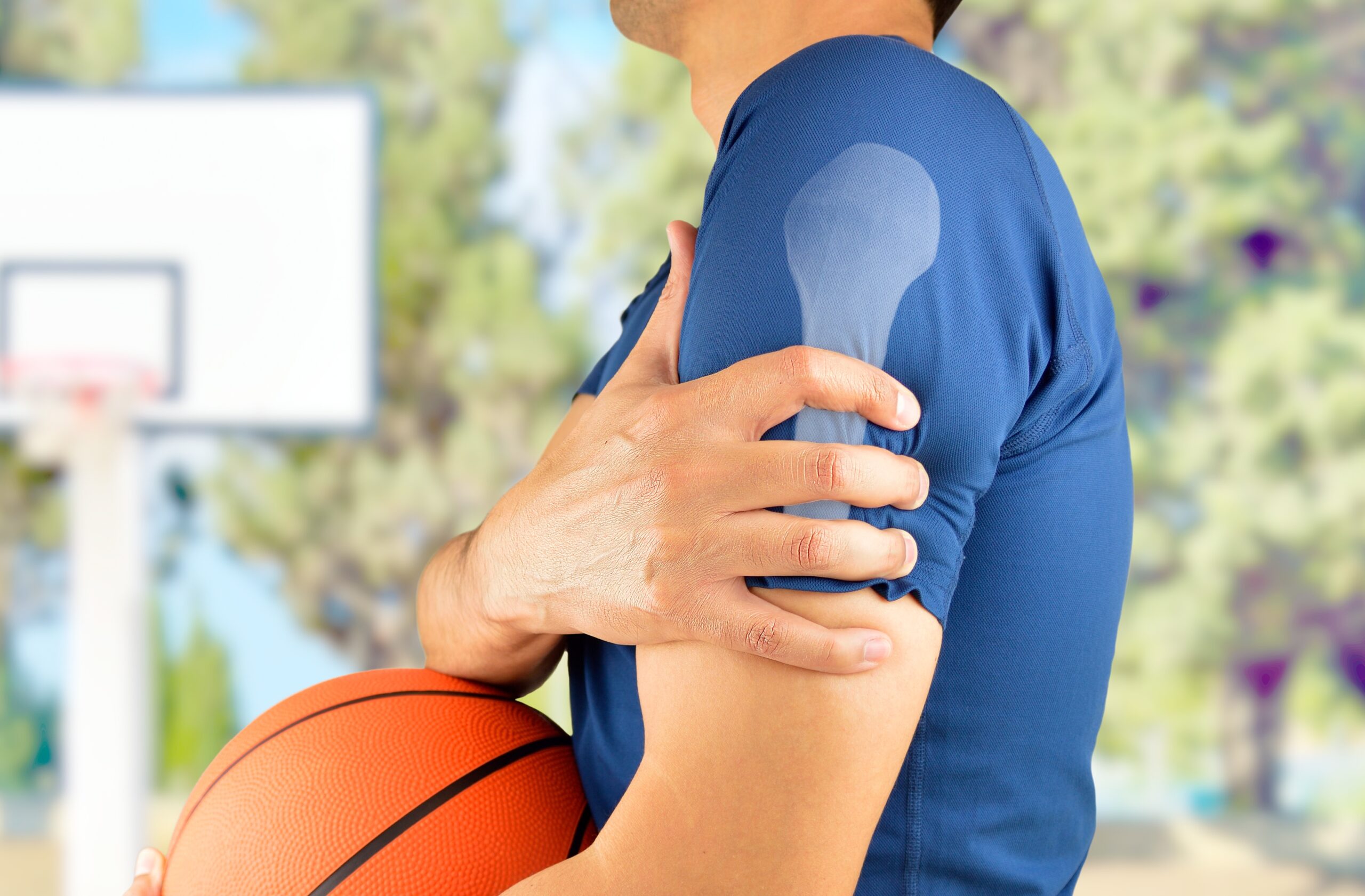
In basketball, the shoulder takes a beating — shooting mechanics, overhead passes, and defensive positioning all place repeated stress on the joint. The most common issues we see in young players are:
- Rotator cuff irritation — inflammation of the tendons that stabilise the shoulder. Often caused by overuse, poor technique, or a sudden increase in training load.
- Shoulder impingement — where tendons become pinched during movement, causing pain when lifting the arm overhead.
- AC joint injury — from falls or collisions, resulting in pain at the top of the shoulder.
The shoulder is a highly mobile joint, which means it sacrifices stability for range of motion. This makes it vulnerable — especially in growing athletes whose tendons and bones are still developing.
“Pain that consistently shows up during or after a specific movement is your body asking for attention. Don’t ignore the pattern.”
— Dr Tan Chyn Hong, Orthopaedic Surgeon
Shoulder Instability and Recurrent Dislocations
A shoulder dislocation occurs when the ball of the joint is forced out of the socket — most commonly from a fall, collision, or awkward landing on court. For some athletes, a first dislocation leads to a pattern of recurrent instability, where the shoulder repeatedly slips out with progressively less force.
This is a condition we see particularly in young athletes, because the soft tissue structures that stabilise the joint may not fully recover without proper treatment. Recurrent dislocations are a painful condition that significantly impacts sports performance — and in many cases, surgical treatment is required to restore stability and allow a full return to sport.
If your child’s shoulder has dislocated once — or if they describe a sensation of the shoulder ‘slipping’, ‘giving way’, or feeling unstable during play — this warrants prompt specialist assessment rather than a wait-and-see approach. Coming back to sport too soon after a first dislocation without proper evaluation is one of the most common ways a manageable injury becomes a recurring one.
“A first dislocation in a young athlete is not something to push through. It is a signal that the joint needs to be properly assessed and rehabilitated before returning to sport — or the next dislocation may happen with far less provocation.”
— Dr Tan Chyn Hong, Orthopaedic Surgeon
The Knee: More Than Growing Pains
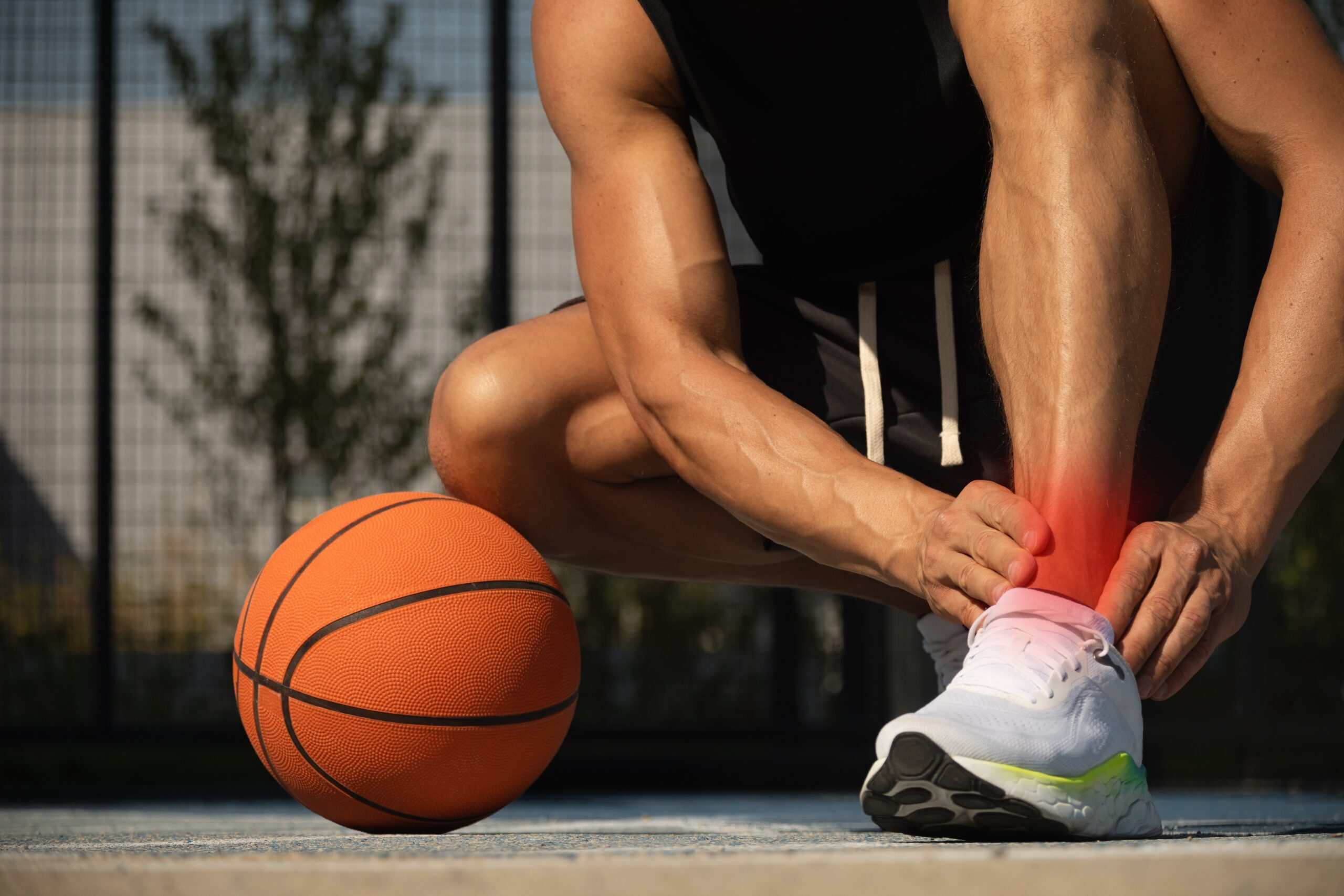
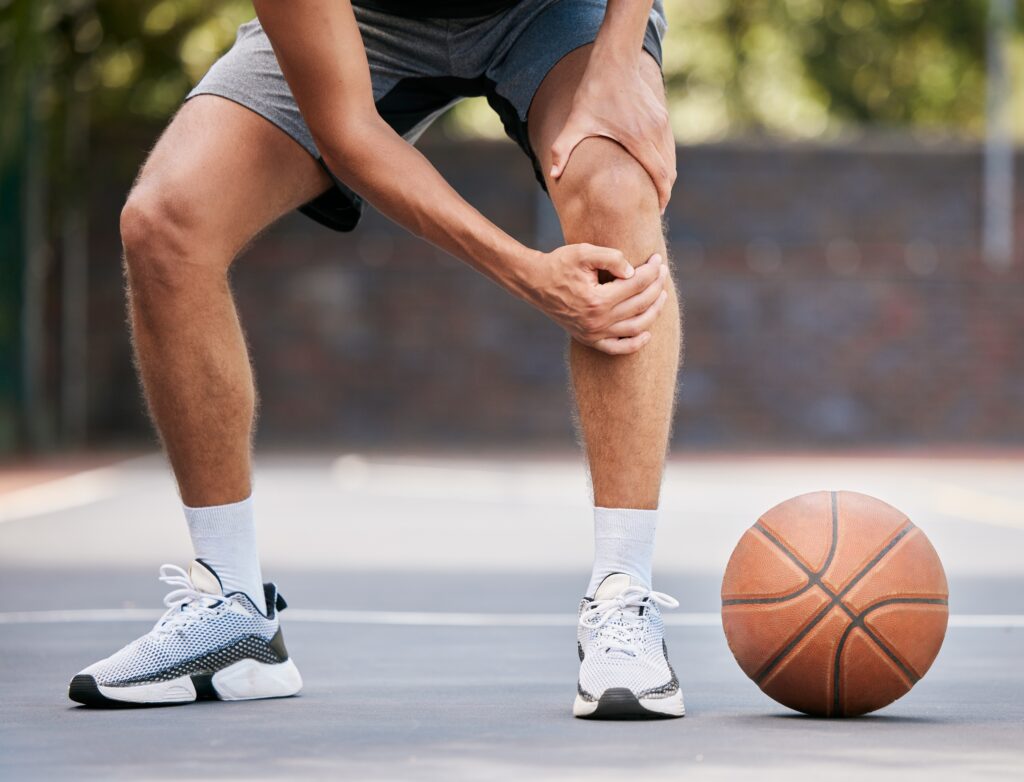
Knee pain in young athletes is extremely common — but ‘growing pains’ is often a misdiagnosis. The most frequent knee conditions we see are:
- Osgood-Schlatter disease — a condition common in adolescents where the tendon attached below the kneecap pulls on the growth plate, causing pain and swelling just below the knee. It sounds alarming; it’s manageable with the right approach.
- Patellar tendinopathy — inflammation of the tendon connecting the kneecap to the shinbone. Common in players who jump frequently. Often called ‘jumper’s knee’.
- ACL injuries — while less common in younger athletes, they do occur, particularly in female players who are at higher biomechanical risk. An ACL tear is a serious injury that requires surgical evaluation.
The knee is the largest joint in the body and absorbs enormous force during basketball movements — cutting, landing, pivoting. Load management and proper conditioning are the best preventive tools we have.
“A young athlete’s growth plate is structurally weaker than their tendons and ligaments. What might be a sprain in an adult can be a growth plate injury in a teenager — the threshold for getting it checked should be lower, not higher.”
— Dr Tan Chyn Hong, Orthopaedic Surgeon
What to Do When Pain Shows Up
Not every ache needs an MRI. But there are signs that warrant prompt attention:
- Swelling in the joint — any visible puffiness around the knee or shoulder
- Locking or catching — a joint that feels like it gets stuck during movement
- Giving way — a knee that buckles or a shoulder that feels unstable
- Pain that doesn’t improve with 48–72 hours of rest
- Pain that consistently worsens with a specific movement or activity
For mild aches, the PRICE protocol is a reasonable starting point: Protection, Rest, Ice, Compression, Elevation. Avoid the temptation to heat or massage acutely inflamed joints.
Prevention: What Coaches, Parents and Athletes Can Do
- Warm up properly — dynamic stretching targeting the shoulders and hips before every session
- Strengthen the supporting muscles — rotator cuff exercises for the shoulder, quad and hamstring work for the knee
- Don’t ignore early pain — address it before it becomes chronic
- Manage training load — sudden spikes in volume or intensity are a common trigger for overuse injuries
- Get technique assessed — poor shooting or landing mechanics place avoidable stress on joints
“The athletes I worry about most are the ones who don’t complain. Pain is information. Teach your child to report it, not hide it.”
— Dr Tan Chyn Hong, Orthopaedic Surgeon
This article shares general health information and is not a substitute for medical advice. If you or your child has sustained a sports injury, speak with a doctor about your specific situation. You can book a consultation with Dr Tan Chyn Hong through Asian Healthcare Specialists, a member of Doctor Anywhere group.
About the author
Dr Tan Chyn Hong is an orthopaedic surgeon at The Orthopaedic Centre (Mount Elizabeth Novena), Singapore. His special interests include minimally invasive shoulder, knee, and elbow surgery, sports injury management, and cartilage regeneration.
Formerly Head of the Sports Medicine Division at the National University Hospital, Dr Tan has treated a wide range of patients, from elite national athletes to those with degenerative joint conditions. As a former national Judo athlete, he deeply understands the physical demands of high-performance training, focusing on helping patients recover effectively and return to sport safely.