By Dr Roy Tan, Ophthalmologist · Asian Healthcare Specialists
Myopia is Singapore’s most common childhood condition. Basketball courts are where eye injuries happen. Here’s how to manage both.
Singapore has one of the highest rates of myopia in the world. By the time a child reaches secondary school, the majority will be myopic. Many of them also play sport — and the intersection of poor vision and fast-moving sport is something every parent and coach should understand.
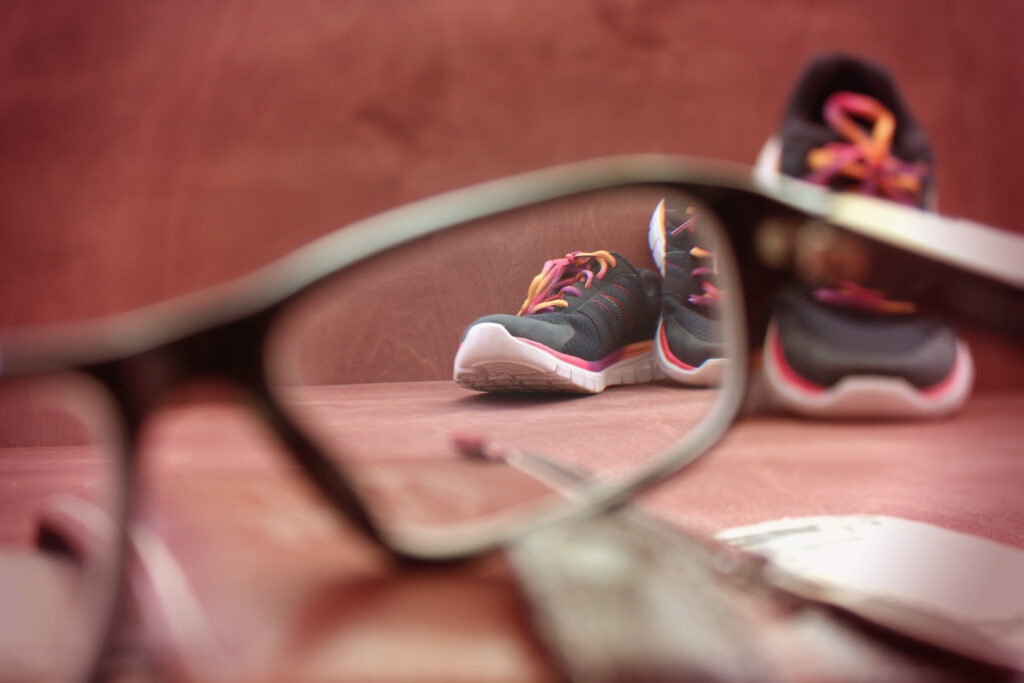
Myopia on the Court
Myopia — short-sightedness — affects how clearly a child sees objects at a distance. On a basketball court, this matters more than parents often realise. A child who can’t clearly see a teammate across the court, or who struggles to track a fast-moving ball, is both less effective and less safe.
The challenge for parents is that children often don’t report vision problems because they’ve never experienced anything different. Regular eye checks — particularly before and during active sporting years — are essential.
- Children aged 6–12 should have their eyes checked at least annually
- Any complaints of squinting, headaches, or difficulty tracking a moving ball should be investigated promptly
- A prescription change of more than 0.5 dioptres in a year warrants closer monitoring
Corrective Lenses and Sport: The Options
For young athletes who are myopic, there are three main options, each with considerations:
- Spectacles — provide clear vision but carry risk of breakage and injury during contact sport. Standard lenses should be replaced with polycarbonate lenses, which are impact-resistant and safer for sport.
- Soft contact lenses — a good option for sport; they don’t restrict peripheral vision and carry no breakage risk. Children as young as 10–12 can typically manage them with proper hygiene instruction.
- Orthokeratology (Ortho-K) — rigid lenses worn overnight that temporarily reshape the cornea, providing clear vision during the day without correction. Increasingly popular for young athletes and has shown evidence of slowing myopia progression.

Eye Injuries in Basketball: What to Watch For
Eye injuries in basketball are more common than many parents expect. Fingers, elbows, and the ball itself can cause trauma to the eye. The most frequent injuries include:
- Corneal abrasion — a scratch on the surface of the eye, usually from a finger. Causes sharp pain, tearing, and light sensitivity. Requires prompt assessment.
- Subconjunctival haemorrhage — a red patch on the white of the eye from a burst blood vessel. Usually harmless, but warrants a check if associated with blunt trauma.
- Blunt trauma — a ball or elbow to the eye can cause more serious internal damage, including a hyphema (blood in the front of the eye) or retinal damage. These are emergencies.
“Any significant impact to the eye in sport should be assessed by a doctor on the same day. The risk of delayed retinal problems means we don’t take a wait-and-see approach.”
— Dr Roy Tan, Ophthalmologist
What to Do If an Eye Injury Happens on Court
- Do not rub the eye — this can worsen a corneal abrasion or push a foreign body deeper
- Cover the eye loosely — do not apply pressure
- Seek medical attention promptly — even if the injury appears minor
- Do not attempt to remove a foreign body — leave this to a professional
Prevention Tips
- Ensure spectacle lenses are polycarbonate if your child wears glasses during sport
- Consider protective eyewear for contact sports — sports goggles are available and effective
- Keep contact lens hygiene strict — infections are more likely when lenses are worn during sweaty activity
- Regular eye checks — catch prescription changes before they become a performance or safety issue
This article shares general health information and is not a substitute for medical advice. If you or your child has sustained a sports injury, speak with a doctor about your specific situation. You can book a consultation with Dr Roy Tan through Asian Healthcare Specialists, a member of Doctor Anywhere group.
About the author
Dr Roy Tan is an ophthalmologist specialising in oculoplastic and orbital surgery, with broad experience in general ophthalmology and the eye conditions that affect young, active patients. He graduated from the Yong Loo Lin School of Medicine (NUS) and obtained his Masters of Medicine in Ophthalmology, later admitted as a fellow of The Royal College of Ophthalmologists (UK) and the Academy of Medicine, Singapore.
He brings deep experience in managing myopia, orbital trauma such as fractures, and injuries around the eye — including the corneal and orbital problems common in sport.