By Dr David Su, Orthopaedic Surgeon · Asian Healthcare Specialists
What to do – and what not to do – in the first 60 minutes of a basketball ankle injury.
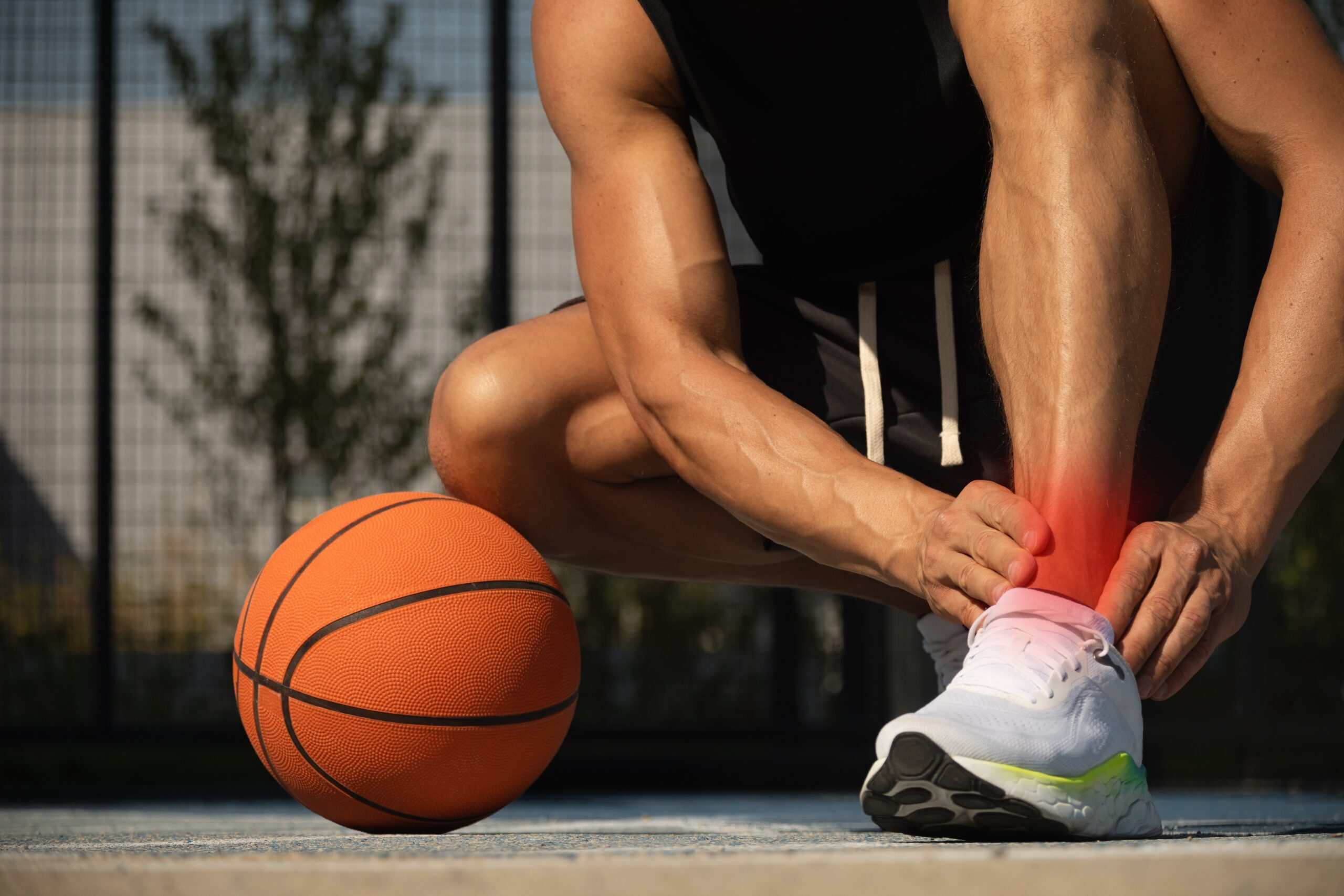
It happens in a split second. A misstep on a landing, a collision on the court, a foot catching the edge of another player’s shoe – and suddenly your athlete is on the ground, clutching their ankle.
Ankle sprains are one of the most common injuries in sport, accounting for a significant portion of all sport-related injuries in young players. But common doesn’t mean simple – and what happens in the first 60 minutes after a sprain can make the difference between a two-week recovery and a two-month one.
As an orthopaedic surgeon, I see the consequences of both. Here’s what I want every parent, coach, and athlete to know.
Sprain vs Strain – They’re Not the Same Thing
The two words are often used interchangeably, but they describe different injuries. A sprain affects the ligaments – the tough bands of tissue that connect bone to bone and stabilise the joint. A strain affects muscles or tendons.
In a basketball ankle injury, you’re almost always dealing with a sprain – specifically to the lateral ligaments on the outer side of the ankle, which are stressed when the foot rolls inward. The severity ranges from a Grade 1 (mild stretching, minimal functional loss) to a Grade 3 (complete ligament tear, significant instability).
A sprain generally takes longer to heal than a mild strain, because ligaments have a poorer blood supply. This is also why coming back too soon is so costly – the tissue simply hasn’t had enough time to repair.
“The tissue hasn’t failed you.
You’ve failed the tissue – by not giving it enough time.”
— Dr David Su, Orthopaedic Surgeon
The First 60 Minutes: What to Actually Do
The immediate window after an ankle injury is critical. Here’s the protocol I recommend – and the mistakes I most commonly see:
- STOP playing immediately.
This sounds obvious, but athletes – especially competitive ones – routinely try to walk it off. If the ankle rolled and there’s pain, the game is over for today. Continuing to play on a compromised ligament risks turning a Grade 1 sprain into a Grade 2 or 3.
- Apply ice – but correctly.
Ice within the first 20 minutes helps reduce swelling and pain. Wrap it in a cloth – never apply ice directly to skin – and keep it on for 15 to 20 minutes at a time. Do not use heat in the first 48 hours. Heat increases blood flow and will worsen swelling.
- Elevate and compress.
Get the ankle above the level of the heart. A compression bandage applied from the toes upward helps control swelling – not too tight; you should be able to slip a finger underneath.
- Do not massage the area.
Well-meaning coaches and parents often rub the injured area. In the acute phase, this disrupts clotting, increases bleeding into the tissue, and worsens bruising and swelling. Leave it alone.
“Ice, elevation, compression – in that order. And resist the urge to massage.
In the acute phase, that does more harm than good.”
— Dr David Su, Orthopaedic Surgeon

When to See a Doctor – The Red Flags
Not every ankle sprain needs an emergency room visit. But some do. See a doctor promptly if you notice any of the following:
- The athlete cannot bear weight at all on the foot – this may indicate a fracture
- Significant swelling within the first 30 minutes
- Tenderness directly over the bone on either side of the ankle – this warrants an X-ray to rule out fracture
- The ankle looks visibly deformed or out of alignment
- Pain does not improve at all within 24–48 hours despite rest and ice
For everything else, RICE at home is a reasonable start – but I’d still encourage a consultation within 48–72 hours to confirm the grade of injury and get a proper recovery plan.
The Cost of Coming Back Too Soon
A sprained ankle that is not allowed to fully heal becomes a chronically unstable ankle. I see this pattern repeatedly: a young athlete sprains the ankle, rests for a week, feels better, goes back to play – and re-sprains it. Each re-injury compounds the damage. Ligaments that have been repeatedly stretched or torn lose their tensile strength.
A properly managed Grade 1 sprain typically heals in 1–2 weeks. A Grade 2, 3–6 weeks. A Grade 3, potentially 3 months or more. Timelines that respect this mean full recovery. Timelines that don’t can mean years of chronic instability.
“Every re-sprain is not just the same injury happening again.
It’s a new injury on top of an old one that never fully healed.”
— Dr David Su, Orthopaedic Surgeon
Taping, Bracing, and Return to Court
Once the acute phase has passed and the athlete is cleared to return, taping or bracing plays an important supporting role. For mild sprains, athletic taping by a trained physiotherapist provides external stability. For moderate to severe sprains, a lace-up ankle brace is more reliable. I recommend athletes use a brace for at least 4–6 weeks of return to play.
Proprioception and strengthening exercises are equally essential. Balance board work, calf strengthening, and sport-specific movement patterns genuinely rebuild ankle function – not just rest.
Prevention: What Athletes, Parents, and Coaches Can Do
- Warm up properly before every session – dynamic stretching and ankle mobility drills take under five minutes
- Wear appropriate footwear – basketball shoes with ankle support, not low-top trainers
- Strengthen the stabilisers – calf raises, single-leg balance work, and lateral band exercises
- Coach landing mechanics – landing with knees bent reduces torsional load on the ankle
- Take prior injuries seriously – an athlete who has sprained before is significantly more likely to do so again
“The best time to prevent the second ankle sprain is during recovery from the first one.”
— Dr David Su, Orthopaedic Surgeon
This article shares general health information and is not a substitute for medical advice. If you’ve noticed any of the changes above, speak with a doctor about your specific situation. You can book a consultation with Dr David Su through Asian Healthcare Specialists, a member of Doctor Anywhere group.
About the author