The hospital used to be the place you went. Increasingly, it’s a service that follows you.
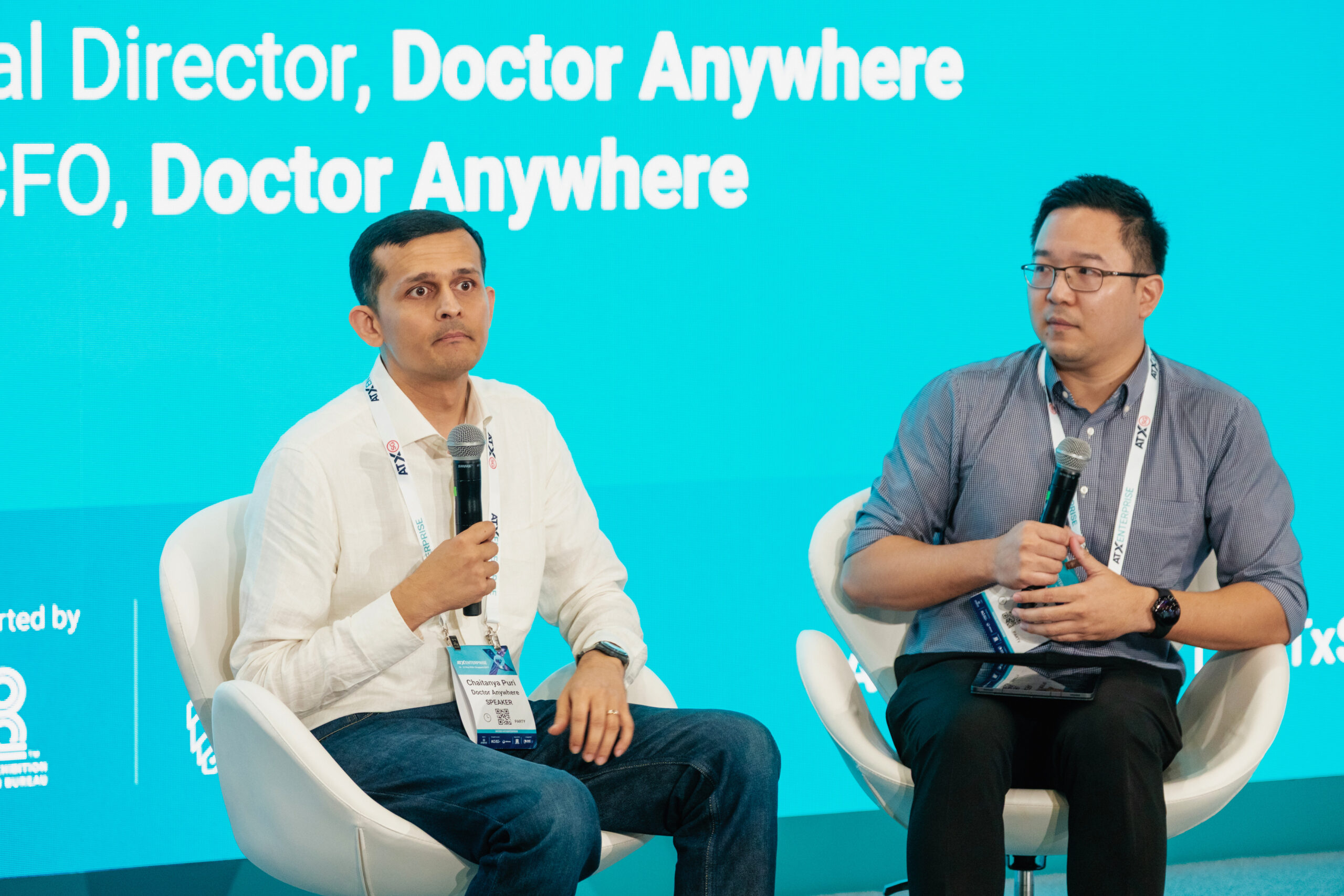
That was the message our Chief Financial Officer Chaitanya Puri (or CP) and Medical Director Dr Andrew Fang brought to the main stage at Asia Tech x Singapore (ATxSG) 2026, held at Singapore EXPO from 20 to 22 May, in a fireside chat on reimagining the patient experience through technology. The industry question behind it: how do you use AI to make care genuinely better — not just more digital?
Here’s what they shared, and why it matters if you’re one of the people we look after.
We’ve evolved beyond telemedicine
Doctor Anywhere still gets described as a telehealth app. That’s about a third of the story.
Today, Doctor Anywhere runs its own GP clinics, specialist clinics through Asian Healthcare Specialists, an integrated screening and imaging centre at DA Orchard MedSuites, home-based services, and employee health benefits through Soda by Doctor Anywhere. The Virtual Consult is one doorway into that system — not the whole building.
We call this our “Hospital, Anywhere” model — care that follows you to your phone, your home, and the clinic nearest you, with one record connecting all of it.

As CP put it on stage: a thin app on top of someone else’s infrastructure can’t deliver a real patient journey. The patient needs a system, not an app.
Continuity is the unglamorous problem worth solving

Dr Andrew’s view from the clinical side: access to care has improved enormously in the past decade. Seeing a doctor is no longer the bottleneck. The harder question is what happens after the consultation. Does the next doctor know what the first one said? Does anyone notice when things start sliding?
Continuity is the problem most healthcare innovation skips, because it’s hard to show in a demo. But it’s where outcomes actually come from. It’s why your consultation notes stay on your record across every doctor you see with us — GP, specialist, screening, or home visit.
Where AI helps — and where it shouldn’t
AI at Doctor Anywhere doesn’t make diagnoses. Your doctor does. What AI does is take on the work around the consultation: drafting notes so the doctor can stay present with you, surfacing relevant history, flagging patterns worth a second look, and — on the insurance side — settling claims in minutes rather than days, catching fraud earlier, and answering policy questions around the clock in multiple languages.
Dr Andrew’s test for any of it: would my parents be able to use this without me sitting next to them? If not, it gets redesigned. The physical side — clinics, house calls, real people — stays, because the most capable technology in the world is useless if it only works for people who are good with phones.
What’s next: staying well, not just getting better
One announcement to watch: Dr Andrew shared that we’re building a longevity offering at DA Orchard MedSuites — proper preventive medicine, not wellness-influencer territory. It brings together your biomarkers, family history, lifestyle, and screening results to shape a personalised prevention plan, with clinicians making every call. More on that soon.
The closing note from the stage stays with us. Our vision is to build healthcare people trust with their lives. You don’t get there in a press release. You get there one consultation at a time.
Curious where to start? A Health Screening is a good first look at where your health stands today.
FAQ
Does Doctor Anywhere use AI to diagnose patients? No. Diagnoses are made by doctors. AI supports the work around the consultation — notes, history, scheduling, and claims — so clinicians can focus on you.
What is the “Hospital, Anywhere” model? It’s Doctor Anywhere’s approach of connecting virtual consults, GP and specialist clinics, screening and imaging, and home-based care on one record — so care follows the person rather than the person chasing care.