The news that celebrity chef Gordon Ramsay underwent surgery for skin cancer is a reminder that this disease can affect anyone. At 58, the famously active personality’s diagnosis of basal cell carcinoma—the most common form of skin cancer—is an important lesson that this disease can affect anyone, regardless of their public image or health status.
In Singapore, we live on the equator, where the sun’s UV rays are intense year-round. Yet, a common and dangerous misconception persists: that skin cancer is a problem only for those with fairer skin. However, data from the Singapore Cancer Registry shows that this is not the case.
The Facts About Skin Cancer in Singapore
While it’s true that fair-skinned individuals have a higher risk, skin cancer is a real and growing concern in Singapore’s multi-ethnic population.
According to the Singapore Cancer Registry’s 2018-2022 data, non-melanoma skin cancer was ranked as the 6th most frequent incident cancer for males and the 8th most frequent incident cancer for females. The registry’s analysis of trends from 1968 to 2016 shows that the incidence rate of basal cell carcinoma (BCC) was highest among the Chinese population and increased by 2.5 fold over the study period. These findings challenge the myth that skin cancer is a problem only for a specific group.
One of the biggest risks for Asians is late-stage diagnosis. Due to the belief that they are not susceptible, many individuals dismiss skin changes as harmless. By the time skin cancer is diagnosed in Asians, it is often in an advanced stage, making treatment more difficult and survival rates poorer.
“The commonest skin cancer seen among locals that I see is basal cell cancer or carcinoma. This kind of skin cancer is present with a gradually enlarging lump, sometimes mildly pearly in appearance with speckles of pigmentation, and may start to ulcerate. The serious form of skin cancer is melanoma, a darkly pigmented growth with irregular borders and colours,” says Dr Lawrence Khoo, a dermatologist with over 20 years of experience, who practices at Asian Healthcare Specialists (AHS).
Decoding the Three Types of Skin Cancer
Basal cell carcinoma (BCC) and squamous cell carcinoma (SCC) are the most common types of skin cancer in Singapore, accounting for the vast majority of cases. Melanoma, while much rarer, is the most aggressive and dangerous.
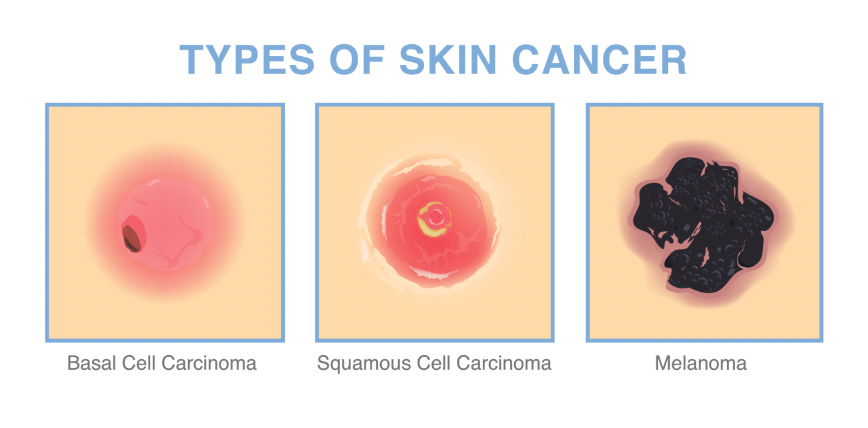
- Basal Cell Carcinoma (BCC): This is the most common form, often appearing on sun-exposed areas of the body, like the face, neck, and arms. It often looks like a pearly or waxy bump, a flat scar-like lesion, or a non-healing sore.
- Squamous Cell Carcinoma (SCC): Also commonly found on sun-exposed skin, SCC can appear as a firm, red nodule or a flat, scaly lesion.
- Melanoma: Though less common, melanoma is the most serious type of skin cancer. In Asians, it often appears in less obvious places, such as on the palms of the hands, soles of the feet, or under the nails.
Beyond Sunscreen: Your Action Plan for Prevention
While sunscreen is a vital tool, it’s not the only line of defence. Here are some practical tips for prevention.
- Be Sun-Smart, Not Sun-Scared: It’s impossible to avoid the sun completely, but it is possible to be smart about your exposure. Avoid the midday sun between 10 am and 4 pm, when UV rays are strongest.
- Check Your “Hidden” Spots: For Asian skin types, skin cancer can appear in less obvious locations. It’s recommended that you pay close attention to your palms, the soles of your feet, and under your nails, as these are common sites for melanoma.
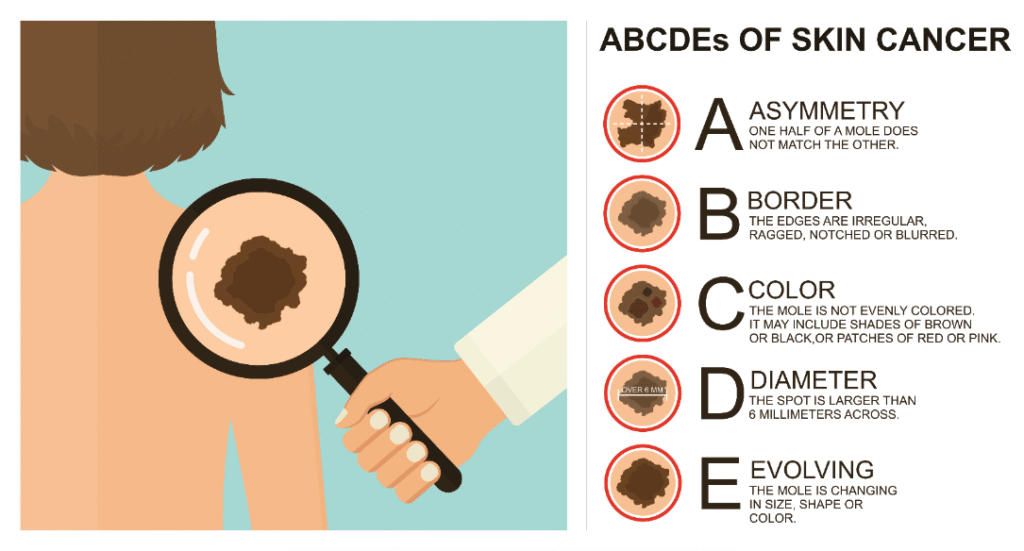
- Know Your Moles and Marks: Most moles are harmless, but any new, changing, or unusual-looking spots on your skin should be a cause for concern. Remember the ABCDEs of melanoma: Asymmetry, irregular Borders, varied Colours, a large Diameter (over 6mm), and Evolving or changing over time.
- The Power of a Professional Eye: The best way to catch skin cancer in its earliest, most treatable stages is through regular skin checks with a dermatologist. A professional eye can spot abnormalities that are easy for an untrained person to miss.
Gordon Ramsay’s story is a reminder that skin cancer is a real threat that affects everyone. By understanding the risks, knowing what to look for, and taking proactive steps to protect your skin, you can significantly reduce your risk.